Sunday, February 2, 2014

Yet to be conquered by the Gaming World !!


The other day, while I was strolling through a popular shopping mall in the city, I came across a Video game store. Social instinct told me to walk away. ‘C’mon get a move on. You’re too old for this stuff. Get real!’ my brain told me. But as I looked on, the child in me beckoned, “Aww, one little peek won’t do any harm. After all, who’s going to buy anything anyways?”. For a few minutes the battle between brain and heart raged within, and after what seemed like an eternity, the heart triumphed. Putting all social inhibitions aside, I walked in.

There were stunning games with jaw dropping graphics and cutting edge gameplay on display from various genres. There were adventure games, strategy games, Role playing games (RPG’s), 3D games, first person and third person shooter games, racing games, simulation games, gambling games and the lot. But there was one point standing out like a sore thumb. None of these games were ‘Indian’ games. And by an ‘Indian’ game, I mean any game developed and published in India, featuring Indian themes and storylines containing Desi locations and characters.

If you are an avid video game enthusiast from India as I am, you will find this fact painfully apparent in all gaming stores across the nation and even online, for that matter. All the leading bestselling video game titles are disappointingly alien. The ‘God of War’ series is based on characters taken from ancient Greek mythology, the ‘Rainbow Six’ and the ‘Call of Duty’ series are based on US Covert Ops and same is the case for other bestselling games such as Tomb Raider, Metal gear etc. A few brave efforts have been made by Indian companies such as Ghajini – The Game, Ra-One and Don2 respectively, but they really haven’t been successful enough to start a gaming revolution in our nation. How nice would it be if major game publishers such as Electronic Arts(EA), Activision etc. made games containing Desi themes? 

Sadly, such a situation seems a bleak possibility given the current and future Indian Gaming scenario. Despite being the world’s largest democracy and the second largest nation in the world in terms of population, we have a very insignificant presence in the world gaming map. Indian Gaming companies are few and far in number, with most of them barely making enough revenues to stay afloat. Gaming giants such as EA have set up development centres in India but are yet to launch a major ‘Indian’ game. Most of their work remains outsourced. To sum it up, there is a general apathy of sorts towards games and gamers in India.

So why this Kolaveri Di towards video games, fellow countrymen? What have they done to earn your indifference? Why does India occupy such a miniscule position in the world gaming map despite a huge potential market and a large talent pool? Seeking answers to these questions, me and couple of my friends, all die hard gaming enthusiasts conducted a root cause analysis of sorts and came up with the facts elaborated below:

First and foremost, despite the huge advances to technology and changes in the attitude of the traditional Indian mind-set, Video Games till this date are considered items of luxury and leisure, adding little or no value to our lives. True enough, how often have we been chided by our near and dear ones for wasting too much times on “those useless video games”? Even today, when I set up my console for a gaming session, my wife gives me the ‘Oh no, not those video games again. When will you grow up?’ look. I have lost count of the ‘n’ number of times I got a lecture from my mother on the ill-effects of playing one game too many. But the best undoubtedly came from my father. “Arre, why do you waste your time playing such useless games? Will they get you a job?” he would state passionately. You just can’t argue with that kind of logic. Sure enough, this kind of attitude has contributed in no small measure to the unpopularity of games in India.

The second factor, as I mentioned earlier is the very few or practically non-existent number of games based on Indian themes. A majority of the video games in today’s market are foreign-published. The language, locales and characters are mostly alien to the vast majority of the populace who identifies readily to desi themes. Let’s take movies for example. Hollywood movies enjoy a good reception all-round the globe with India being no exception. However, even the highest grossing foreign films released in India have generated comparatively lesser revenues as compared to any Indian film deemed as a commercial success these days. Foreign films, particularly those from Hollywood, despite being excellent in quality and visual appeal lack penetration in the domestic market. Language and culture are the major limiting factors. The Indian audience finds it difficult to relate to alien themes and story-lines. Similar is the case with video games. To change this trend, publishers must start making games with Indian themes. Imagine how nice it would be to play a game on the lines of ‘Grand theft Auto’ set in the streets of aamchi Mumbai. How nice it would be if we had a game similar to Age of Mythology or the Age of Empires based on Indian kingdoms, kings, queens, handsome princes, magicians, wizards, beautiful princesses, demons, monsters and the lot.         

Then there is also the financial aspect to consider. The prohibitively high cost of gaming equipment and related accessories makes the average Indian consumer think twice before purchasing them. Buying a top-notch gaming console such as the PS3 or the Xbox 360 would cost you anywhere between Rs.20-30k. Now many people will apply conventional wisdom and say that such an amount of money can be put to better use and I am compelled to agree with them. Each gaming CD for any of the above mentioned consoles (or even the latest game PC-CD ROM for that matter) costs around Rs.2k on an average. Spending that amount for a game is a huge proposition for the average cash-strapped Indian. Now, console games can be best enjoyed on a high-definition television of minimum 32 inches display which easily costs around Rs.40k. Yet another expensive proposition for the Indian Consumer! All in all, gaming is an expensive passion, one which very few consumers can afford. Video Game giants please take note!

Socio-economic factors also contribute in a major way to the popularity of video games in our nation. Consider the example of a giant turtle giving birth to eggs on the beach. As soon as the eggs hatch, thousands of baby turtles make their way to the sea. But only a lucky few make it to the waters. Thousands are carried off by predators or are eliminated by other natural causes. In a similar manner, youngsters are discouraged from playing video games right from childhood. Video games are considered as objects of no value. Parents blame video games for inciting violence and other form of anti-social behaviour amongst kids. The first wave starts then. Then comes teenage and college, where students are engrossed in studies and making a career and hardly have time for games and other luxuries. After graduation starts the great Indian job hunt. Needless to say, with career insecurity and similar factors looming large, video games surely do not figure on the high priority list of most. After finally landing up with a job, people are then engrossed in making a mark for themselves and climbing up the corporate ladder. Activities such as games are usually placed on the back-burner during such a phase. Then comes marriage and kids along with a heap of additional responsibilities. As we become parents ourselves, we ironically discourage our children from playing the same video games we ourselves loved once upon a time. And so the vicious circle continues. Probably, the only time we have free for playing games would be in our ripe old age, with nothing left to live for.   

But whatever the negatives, there are also a few positives. The smartphone and android revolution is changing the scenario, albeit a bit slowly. Mobile gaming has become a new hobby and passion amongst youngsters brandishing large smart-phones and tablets. Hopefully, with the right incentives this should emerge as one of the new and exciting major career opportunity in the near future. We might not see a huge spurt in the sales of next-gen consoles and games but with technology now coming in the reach of the common man and rising income levels, we might just see a change in attitude and trend. For every nine anti gamers, there is and always will be one pro gamer born like me who will spread the gospel “Love thy games!” and try to covert anti to pro. Here’s hoping for the best!

Srinivas Pavan Addanki  

Edit: A few mature and enterprising souls seem to have heard the desperate please of die hard Indian gamers like me and have taken the bold step in developing games based on India and Indian themes. See the links below for more details:

Five made-in-India games to look forward to in 2016.   

http://gadgets.ndtv.com/games/features/five-made-in-india-pc-games-to-look-forward-to-in-2016-782281

Top 10 Mobile games made in India

http://blog.soom.la/2015/12/top-10-mobile-games-india.html

Here's wishing them all the very best in success.

Saturday, November 9, 2013

Modern Times

This story is taken from the Chandamama magazine, a treasure trove of stories and values. They just don’t make books like these nowadays. Of all the wonderful stories I have read there, this one just stayed in my mind. I won’t say anymore. Read this story and judge for yourselves.

A long time back in ancient India, the kingdom of Kushalgadh was ruled by a Maharaja named Vikram Singh. Vikram Singh was an able and just ruler, always keeping the interests of the kingdom and his subjects above his own. Needless to say, Kushalgadh saw great peace and prosperity during his reign and his subjects always remained happy and contended. But despite all his achievements, deep down inside the King always had the nagging doubt whether he was really the ruler the people made him out to be. He was curious to know the conditions of the kingdom before his rule, at the time of his father and his grandfather.

So to satisfy himself, one day he organized a huge gathering of all aged scholars and wise nobles, people who were part of the kingdom before he ascended the throne. He organized a presentation ceremony and rewarded the scholars with lavish presents. In turn, the scholars heaped praises upon the king and blessed him with long life and prosperity. At the end of the ceremony, the King addressed the gathering and put forth the question which was bothering him.

“Esteemed Scholars and Wise men,” he started “I am well and truly honored by your presence and I thank you profusely for taking the trouble of meeting me. I have called this gathering to ask you a question which has been nagging me for quite some time. I am sure that most of you have the answer to it.” He said.

The entire crowd became silent and curiously waited for the King to elaborate further.

“I know that most of you have been in this Kingdom much before my time and have also been witness to the rule of my esteemed father, Maharaja Gopal Singh and his father, my grandfather Maharaja Dushyant Singh before him. I want to know honestly from all of you, since most of you have been witness to both eras: How does my current rule compare to that of my father’s and grandfather's rule? Are my subjects truly happy? Are the conditions in the kingdom during my rule better or worse during that of the previous rule?”

The entire crowd was stunned into silence. Many were wondering how to put the answer as diplomatically as possible. They know that if they praised the rule of one King, it would be like denouncing the rule of the other, tantamount to insulting the ruler himself. The King, for all his virtues was also a man of quick temper. There was no telling what he might do if enraged.

Sensing the uneasiness of the people around him, the King said, “Pray do not hesitate in giving an honest answer. I am asking this question for the good of the Kingdom and all its’s subjects. If there is any shortcoming on my part, anything which I have overlooked, I will be most happy to rectify it to make Kushalgadh a better place.”

Still no one dared reply. There was a palpable tension in the air. Finally the King, exasperated by the long silence shouted in frustration, “IS THERE NO ONE WHO CAN GIVE ME AN HONEST ANSWER?”.

“Excuse me your highness!”, a voice same from the crowd. The one who had spoken was an old man near about ninety years of age. His skin was wrinkled and rough and his back hunched a little. But there was a slight twinkle in his eyes and a smile on his face suggesting that he had seen a lot in life and yet had the zest and enthusiasm to keep going.

Immediately, the King’s eyes lit up with hope. Here was someone who perhaps had the answer to his question.

“Dear Sir”, the King asked the old man, “It seems you have an answer to my doubt. Please speak without fear or hesitation. I assure you your answer will be well received.”

The old man replied in a slow but steady tone “Your Highness, I was born about ninety years back and I have witnessed the rule of three generations, that of your esteemed grandfather and father and now your illustrious self. I might not have the direct answer to your question. But let me narrate my life experiences which might help you to gain some insight.”

The King replied with brimming curiosity, “Please proceed by all means, wise sir.”

The entire hall was wrapped in silence as the old man began.

“My name is Raghav. I was a trader by profession until I retired recently. I was born during your illustrious grandfather’s rule. Now there was another family living next to me who had a boy of the same age as mine. His name was Shyam and soon he and I became great friends. We would play together, go to school together, study and eat together. Our closeness grew and we became more like brothers. Soon, he and I got married one after the other. In time, my wife gave birth to a daughter and a few months later so did Shyam’s wife. Life still continued the same way until one fateful day Shyam called me over to his house. He had not been keeping well for some days. I was shocked to see him looking seriously ill and in poor condition. His eyes were blood red and his body was shivering violently. Concerned, I sat next to him. Slowly, with great effort he managed to speak.

‘Raghav’ he spoke at length, ‘The doctor has spoken. I know for sure now my days are numbered. It is only a matter of a few days before I depart this world.’, he said weakly.

‘Do not speak of such things my friend.’, I replied, distressed. Although I tried to give him hope, deep in my heart I knew he was telling the truth.

‘I have lived a full life and have no desires left. My only worry is for my daughter Nirmala. After I depart she will have no-one to care for her in this world. Raghav, you have been more like a brother to me. Consider this as a dying man’s request. Please take care of Nirmala after I have gone. I have set aside a pile of money for her marriage dowry. As soon as she is of suitable age get her married off to a respectable family. I have nothing more to ask of you. Please do not refuse me.’, he pleaded.

‘Do not worry Shyam. Nirmala is like a daughter to me also. I will make sure she is comfortably settled in life. I will look after her like my own daughter.’, I replied with conviction.

In a few days Shyam died from prolonged illness. His wife, unable to bear the pain of his death went into a coma and herself died a few days after Shyam’s death. True to my word, I adopted Nirmala and took care of her like my own daughter. After she came of age, I got her married off to a boy from a respectable family and gave the couple the money kept aside by Shyam as her dowry.

Some years back, during your illustrious father’s rule, Nirmala visited me. She was now happily married and settled. I was in a slight financial difficulty at that time. Seeing her a thought occured to me. What if I had kept the money given by Shyam for myself and got Nirmala married off to a boy from a poor family? Who would have known? I could have kept the money all for myself. I cursed myself for my honesty. Life went on as usual.

Sometime back, that is recently, under your rule, Nirmala came to visit me in one of her usual routine visits. Even though she had aged and was a now a mother to a daughter herself, she still looked as radiant and beautiful as ever. Seeing her a feeling of lust overtook me. I now cursed myself for letting her go. I felt that I should have kept her as my mistress and used her to satisfy my desires. I could have also used the money for my own personal benefit."

Err.... that is all I have to say your highness.” Raghav concluded a bit sheepishly.

There was pin-drop silence in the crowd as the people slowly gathered the intent of Raghav’s speech. The King himself was slow to react, his face turning into a mask of puzzled expressions. Then, slowly, the truth dawned on him. He rose from his throne and walked over to the old man. There were muted and excited whispers from the crowd.

“That’s done it. The King will surely have his head now”, one noble whispered to another.

“The old fool. He should have kept his mouth shut!”, the other noble whispered back in agreement.

 “I hope my little yarn has not offended you, your highness!”, asked the old man, a bit troubled seeing the King standing in front of him.

The King looked at him for sometime, wearing a serious expression on his face. Then slowly, a smile broke on his countenance. “No my dear Sir. I am not in the least bit offended.”, the King replied gracefully. “Far from it, I am truly grateful. You have really opened my eyes. I have grasped the meaning of what you intended to convey. At the time of my grandfather’s rule, people were hardworking and honest and also had a good sense of moral values and virtues and would live up to their commitments. During my father's rule, the decline had started. People started getting greedy and money-minded, even though their sense of moral values were still intact. And now during my rule, the decline has become absolute. Apart from being greedy, people have also lost their sense of moral values and are slowly getting characterless. I could not have put it in a better way myself. You have killed the snake but have kept the stick intact. Well done Sir!”

Hearing the King’s praise, the entire hall burst out into applause. The King embraced the old man and rewarded him handsomely. Heeding the old man's advice, the King took drastic steps and soon rooted out all moral vices and corruption, setting Kushalgadh on the path to peace and prosperity for the coming generations.


Tuesday, August 20, 2013

Who is your ideal leader?

When you speak of Leaders, who first comes to your mind? Who do you think is an ideal leader? Or to put it in a better way, what qualities do you think an effective Leader should have in him / her? This is a debatable question with lots of different viewpoints. Some say a leader is one who leads by example, someone who inspires his/her team to follow in his/her footsteps by sheer dint of talent and ability. Other say that a true leader should inspire a mix of fear and devotion for himself / herself among his team mates, for only then he/she will be able to command and lead his/her team effectively.

History is filled with leaders who have inspired thousands or even millions of people with their words or actions to achieve huge goals. These ‘leaders’ were not Gods or Goddesses possessing supernatural abilities. On the contrary, they were simple people who possessed a clear vision and by virtue of sheer diligence, charisma, perseverance and doggedness inspired millions to follow in their footsteps. Mahatma Gandhi was a simple man who chose to cover himself with the simplest of clothing. But it was this simplicity which was his greatest weapon. Armed with nothing but a mere walking stick, he soon gained the confidence and trust of the Indian masses and ultimately drove the British out of India. Adolf Hitler, on the other hand was an autocratic leader with extreme views. Even though he was a failure in academics, he was a fiery orator who mesmerized and inspired millions of Germans to take up arms. 

Different leaders have different styles. But if you scratch the surface, you will see that all leaders have common traits:
a)      A clear vision and focus on their goals and targets
b)      A Never say die spirit, determination and energy to achieve their dreams
c)       Toughness to remove any obstacles lying in between.
d)      Respect and admiration of their supporters and team members.

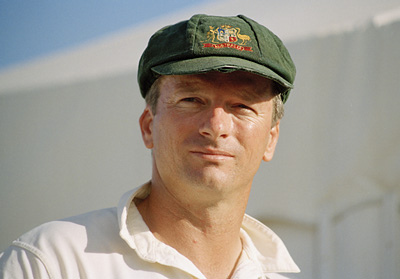
Ok, so coming back to our question, what would you look for in a leader? For me, Steve Waugh and Saurav Ganguly are my idols when it comes to leadership. India is a cricket crazy country. All Indians are cricket fanatics and I am no exception. So I am sure many of you who follow cricket with the same passion as me will agree. Both persons have totally contrasting personalities. Steve Waugh has always been the quiet and introverted type and has often been criticised as someone who does not communicate well enough with his team mates. Saurav Ganguly, on the other hand has been labelled a touch too aggressive and outspoken by the media. Yet, the records of both men speak for themselves. Both persons have carved a niche’ for themselves in the cricketing world with their unique brand of leadership.


Steve Waugh was nicknamed the 'Iceman' for his cool and emotionless demeanor on the field and his grace under tight and pressure-filled situations. When he took over captaincy of the Australian side in the late nineties, he had a difficult legacy to uphold. Previous captains Allan Border and Mark Taylor had left behind an enviable record. Maintaining the same winning form was a daunting task in itself. The media had dubbed him an introvert and criticized his silent attitude on and off the field, seriously doubting his leadership capabilities and his ability to communicate with his team mates. But Waugh soon put all those doubts to rest and under his leadership, Australian cricket reached dizzying heights and set standards of excellence so high that even current cricket teams find it near impossible to equal them, leave along surpass them. Under his leadership, Australia won a world record sixteen consecutive test matches (seventeen had it not been for VVS Laxman in Kolkata, 2001). Under his captaincy, Australia bounced back from near elimination in the 1999 cricket world cup and went on to win the tournament. Under him, Australia stamped their authority on world cricket for nearly a decade. By his uncompromising tactics, mental toughness and shrewd cricketing acumen, he forged an unbeatable team comparable to the legendary West Indian team of the seventies led by Clive Lloyd. Waugh was a brilliant tactician and a ruthless adversary, who would not hesitate to use unorthodox tactics and strategies to eliminate the opposition, even though sometimes this caused him to come under some sharp criticism by the media. He never took his place in the side for granted and always came out fighting. He inspired his team mates by instilling a sense of natural pride for their country and their game. When he retired in early 2004, he left behind a legacy which is still spoken about in high regard in today’s cricketing circles. What made Waugh stand out from the rest was his mental toughness and his never say die attitude. Personally, he was not endowed with the brilliance of Tendulkar nor the genius of Lara. But what he did have was the tenacity to keep going even under the most hopeless situation and the guts to follow his heart. In all senses, Steve Waugh was the true leader.


When I think of Saurav Ganguly, there is one particular image which crops up to my mind. India had just defeated England after a thrilling run chase at the finals of the Natwest trophy in 2002. Saurav Ganguly defied all traditions and conditions and did what no Indian had earlier dared to do at Lords. He tore off his T-shirt and waved it furiously, aping Andrew Flintoff's similar behavior back in India. That one scene sums up Saurav's attitude in a nutshell. When Saurav Ganguly(Dada as he was affectionately called by his team-mates) took over as Captain in 2000, Indian Cricket was having more than it's fair share of problems. Sachin Tendulkar had resigned as skipper citing Injury problems and poor form. The Indian team was going through a dip in fortunes, having lost recent test series and one day matches. The media was having a field day criticizing the team’s poor performances. India always had a good record at home, but could not emulate the same success overseas due to various reasons some of them being lack of exposure to bowler friendly pitches usually found abroad, over emphasis on batting and  low mental strength of the team in general to name a few. Morale was at an all-time low and the faith of the Indian public in their cricketing idols was waning. But Saurav changed the mind-set of the team with his aggressive and no nonsense attitude. Under his captaincy, the team regained faith in itself and went on to conquer hurdle after hurdle. India went on to win test series in England, West Indies and Pakistan (the latter coming after a gap of more than a decade) and drew a test series in Australia, which was easily the best test playing team at that point of time. India’s performance also improved in ODI’s. Under Saurav’s stewardship, India won many major ODI tournaments. The most significant achievement for Saurav was leading India to the finals of the 2003 cricket world cup after a superb run in the qualifying rounds. Even though they were outplayed by Australia in the finals, they won the hearts of cricketing fans with their superb all round performance. Saurav changed the traditional Indian defensive mind-set with his aggressive attitude. He promoted new talent but at the same time supported the seniors in his team. He always backed himself and his decisions under extreme pressure which ultimately paid dividends. His decision to promote VVS Laxman to the number three slot in the 2001 Eden Gardens test match proved to be crucial as it stopped the Aussies winning streak. India went on to win the test match and the test series. Even though the latter half of Saurav's cricketing days were dotted with various controversies including match-fixing allegations and disputes with coach Greg Chappell, no-one can take the credit away from a glittering career and extra-ordinary leadership abilities that put India back firmly on the world cricketing map and helped in regaining the confidence of the Indian cricket fans. With his gifted cricketing brain and his all-conquering attitude, Saurav Ganguly will always be one of India’s greatest cricketing captains and a leader in every sense.

Monday, June 17, 2013

Which is better: Manual or Automation testing?


This is a very interesting topic which has been debated endlessly ever since the evolution of Software Testing and more so in recent times, as Software QA and testing has gained more prominence.

Let me first start by demystifying the myth about Automation testing. Many people have the misconception that Automation gets the work done faster than manual, hence it is better. The truth is far from it. While Automation definitely has its advantages and can reduce time and improve productivity, it is in no way an effective replacement for manual testing.

Any Software, big or small has to go through one round of manual testing as a minimum (or more as the situation demands). Manual testing requires domain knowledge, thorough technical grounding and good testing instincts with creativity to spot bugs early on as a minimum. Only after the functionality has been ascertained and the application stable can we proceed with automation. And also, there are certain areas which cannot be effectively tested by Automation testing.

That said and done, in todays’ testing scenario, given the complex nature and strict timelines needed to deliver top quality applications, we cannot afford to ignore automation at all. We would be doing so at our own peril. Automation can help us perform repetitive and complex tasks faster and safer leading to greater productivity. Automation also helps to reduce the load on manual testing giving testers more time to do some exploratory testing on the product, in turn leading to higher product quality. Automation has been used extensively and effectively in tasks involving high degree of repetition and complexity such as regression testing, cross browser testing, loads and stress testing etc. To put it in Industrial terms, manual testing can be compared to the initial design and testing of any product in a factory such as an automobile. Automation can come later and can help in performing tasks repetitive and time consuming tasks faster such as assembly, spray painting etc.

In a nutshell a complete tester / test manager / lead would be one who has a good understanding of automation tools as well as emphasizes the importance of manual testing. Manual testing would be like laying the basic platform for good and robust software of excellent quality and Automation can help us build on that and improve our delivery timelines and overall product quality by leaps and bounds. As the complexity and size of software grows, the more intermingled and important both will become.

Sunday, March 17, 2013

Score One for the Indian Foreign Policy

Dear Leaders of our nation,

I wish to congratulate you on the superb diplomacy you have shown by letting two murderers of Innocent Indian Citizens slip away smoothly before your eyes.

On the 15th of February 2012, two Italian Marines aboard an Italian Oil tanker off the coast of Kerala opened unprovoked fire on a harmless fisherman's launch and killed two innocent citizens. The marines claim they had opened fire on what they thought was a "Pirate" Ship. Full credit to the Indian coast guard for chasing them and arresting the culprits in question.

After which, the marines were remanded in Judicial custody until early this month where they requested to return home back to Italy, to vote in the elections. Our magnanimous government, following the saying "Athithi Devo Bhava"(Treat guests / visitors like gods) to the full, allowed them to leave. And predictably, Italy is now refusing to hand them over for trial. Which country will send their citizens back to face murder charges? How much pull and influence does India carry for Italy to bow down under diplomatic pressure and send back the Marines?

This incident reminds me of a story, which, though not connected with the above incident, reflects the current situation very well:

Long ago, in the life and times of Emperor Jalaluddin Mohammad Akbar, the greatest Mughal ruler of ancient India, there once visited an Arabian horse trader with the sole intention of selling his fine Arabian steeds for the Emperors' Royal Stables. It was a known fact those days that Akbar fancied fine horses of various breeds and would spare no expense for procuring the finest specimens. So it was with no great difficulty that the trader was granted an audience with the emperor in the court in the presence of Birbal and other ministers of state.

Akbar was highly impressed with the superior breed and strength of the horses for they were magnificent indeed. In fact, so impressed was he that he immediately offered to buy the horses from the salesman at the asking price.

"These Horses are indeed fine specimens of their breed.", said Akbar. "How much are you selling them for?", he asked the trader.

"Your highness, the asking rate for each Horse would be 200 gold coins each. But I would not dream of taking money from you. Please accept two horses from my collection as a gift from Arabia. But if your highness so wishes, please loan me advance amount for any number of horses you require. I shall procure them for you and hand them over in my next visit", the trader replied.

"That is a noble gesture indeed.", Akbar replied, impressed by the traders gesture. "You will not go unrewarded. Take enough money for 12 such fine horses from my treasurer. Tell him that I have ordered it. Show him my seal.", he said.

The trader, happy at having secured a valuable deal walked off towards the treasury. Birbal, mute witness to the entire conversation now spoke for the first time. "Your Highness," he spoke with dignity. "Do you think it was wise to give the trader the entire amount in advance? We have not verified his credentials yet."


"Nonsense Birbal. You are too suspicious! Look at the fine specimens he has gifted to me. He will return with better specimens now that I have given him the entire amount. Also, this will improve relations between our Kingdom and Arabia." Akbar replied heartily. Birbal, sensing that his King was in no mood to discuss this matter further, kept silent.

A few months passed by. Akbar one day summoned Birbal in his private chambers for a task.

"Birbal", he said "I have a task for you. Only you can do it for me.", he said.

"I shall do my level best, Jahanpanah!", Birbal replied, all agog with curiosity.

" I need a list of all the fools in my kingdom. Scour the entire length and breadth, across all borders and all cities and towns. Take as much time and resources as you require.", Akbar asked.

Birbal replied in the affirmative and set out on his task. A few weeks later, he returned back with a huge sheet in hand.

"Jahanpanah! I have scoured the entire kingdom and have brought the list you desire.", he said proudly as he handed over the sheet to his emperor.

Akbar was pleased as he opened the list. But very soon, his smile turned into a frown as he saw the very first name on the list. It was his very own name "JALALUDDIN MOHAMMAD AKBAR", printed first. He could not believe his eyes. He looked again to make sure his eyes were not deceiving him. Sure enough, it was his name only.

"BIRBAL !!", he roared, his face twisting in rage. "Give me a good reason for this ! If I did not trust you for serving me loyally for so many years, I would have you beheaded this very instant!"

Birbal replied, unruffled and in a soothing tone,"Please compose yourself Jahanpanah, and listen to me carefully. Do you remember the Arabian Horse trader to whom you had so generously donated money for a dozen or so Arabian horses some months back?"

"Yes I do! What of it?", Akbar snapped back irritatedly.

Birbal continued in the same soft and soothing tone. "Jahanpanah! You will remember how I advised you against the deal keeping in mind that his credentials as a valid dealer were not yet established. Yet, your highness, you were too hasty. You were so impressed by the two specimens he gifted to you that you willingly gave him money for twelve such horses, but you only got two for the sum paid. He has not yet returned and as I suspect, he never will."

Akbar was stunned. "By Allah, Birbal! You are right!! Oh what a fool I was to give me all the money in advance. I should have given the money to him after he returned with the horses.", he said, morosely. "But then," he added suddenly with a twinkle in his eye, "What if he returns with the horses as promised?"

"In that case Jahanpanah", Birbal replied calmly, "I will replace your name with his!"

Akbar laughed heartily and rewarded Birbal for his wit.

As in the above story, it can be noted how India and Italy's democracies function.

Will Indian prisoners and undertrials languising in foreign jails be sent to India for similar requests???

Would India have granted Ajmal Kasab the same favour had he requested visiting Pakistan before his appointment with the gallows?

In 1994, an American teenager in Singapore named Michael Faye was caught red-handed spraying paint and painting graffiti on cars and walls. By Singapore's laws, he was sentenced to ten painful strokes of the cane. This soon became a national issue and raised a huge uproar amongst American Citizens who took it as a prestige issue, so much so that President Bill Clinton was asked to intervene. But despite US pressure and international criticism, Singapore did not budge. After much hue and cry, the sentence was reduced to seven strokes, much to the chagrin of the US(many considered this as an insult). Now, if a small country like Singapore could take on the mighty US, I wonder what stops us from protecting the rights of our citizens in our own country.

It's high time that India stops this 'doormat diplomacy' and starts asserting itself in South Asia, sending across a strong message to it's neighbors and detractors.    

It remains to be seen how Italy reacts to India's protests.

Friday, February 15, 2013

My experiments with Project Tiger

It has been my sincerest endeavor since last year to capture the Tiger, India's national animal and a symbol of pride on my Camera. But all my efforts till date have been in vain.

Let me recount my experiences for your benefit.

It all started one fine day, in between the soul-numbing work of office life when the wildlife bug bit me. I had just obtained my most prized toy, my new DSLR. With high hopes and enthusiasm, I went to Nagarhole Sanctuary in April 2011, armed with Camera, Lens and other equipment. But all I could see was a hell of a lot of wild deer, Elephants, Bison and other miscellaneous animals. Sher Khan remained invisible.

Not one to be disappointed easily, a few months later I went to Bhadra tiger reserve near Chikmagalur, Karnataka again with renewed hope in my heart, which soon turned out to be a disappointment as our striped friend still remained in hiding. I was rewarded in that trip though by some good photos of various other animals, some small consolation.

If at first (and in this case second) you don't succeed, try try again as the old maxim goes. And so, twice bitten and third time desperate, this time I slunk off to Bandipur WLS once again with hope and spirit renewed. But ..... same old story. No tiger near or far. Not even a cat.

So finally, to satisfy the wild life photographer in me, I ended up going to the Mysore zoo and took snaps of the Tiger settled comfortably in the cage. Sometimes, I seriously wonder whether the 'There are only 1700 odd tigers left in India' slogan by the Save the Tiger foundation is really true. I do wonder if there are any tigers left in India. Probably, the best place to view them at close range would be the zoo.

Now I'm very much like a wounded Tiger myself and hope to fulfill my dream someday.

Tuesday, October 5, 2010

Rajni rocks in 'Robot'


Ten years in Pre-production, more than two years in the making, with a budget of One hundred and Seventy Five Crore rupees, surpassing even the most elaborate and expensive budget of a top-notch Bollywood movie, a star studded cast with Super Star Rajnikanth in the main lead and music by none other than the maestro A.R. Rahman. One would be excused for having not huge, but Mega expectations from the movie “Endhiran” (Dubbed ‘Robot’ in Hindi and ‘Robo’ in Telugu).

And so, filled to the brim with excitement, I set out to watch the movie ‘Robot’ in Hindi. Given a chance, I would have watched it in Tamil or Telugu, but given my roomie’s (read Room partner) eagerness to watch the movie, and keeping in mind his lack of knowledge of either of the above mentioned languages, I had to settle for the Hindi version. I was a bit sceptic though, about watching a South Indian Movie dubbed in Hindi. The last dubbed movie I saw “Aparichit”(‘Anniyan’ in Tamil and ‘Aparichitudu’ in Telugu) was a huge let down because the dubbing sucked. This really took away the fun of what was really an awesome movie. It might also have been because I saw the original before and …well… the original they say is….. really the “Original”. But thankfully, the dubbing in ‘Robot’ was good and at no point in the movie did I get the effect that one usually does when watching badly dubbed movies from the south.

Well anyways, coming back to the main subject, ‘Robot’ is Shankar’s second venture with Rajnikanth after ‘Sivaji – The Boss’(2007). ‘Sivaji’ was a huge commercial success in Tamil and Telugu (though it did not manage to impress in Hindi) and raised the expectations from Shankar to a feverish level. And I must say, Shankar has done a commendable job working through these expectations and making a movie which delivers the goods. How often have we seen movies generating intense hype and curiosity before release and then fizzing out to tame responses in the opening week of box office? ‘Roop ki Rani, Choron ka Raja’ and ‘Veer’ are the best examples of such over hyped movies which failed to live up to their expectations. But the same is not the case with Robot. ‘Robot’ is an out and out entertainer which grabs your attention from the starting reel till the finish. Once again Director Shankar needs to be complimented for using technology to it’s maximum extent, redefining a new standard in Indian cinema. It’s sad that such talented filmmakers are confined to the South. Bollywood needs such filmmakers to raise its standard and to show the world our mettle.

The story starts in the lab of Dr. Vaseekaran (Rajnikanth), who is hard at work developing a Robot with advanced AI capabilities, along with his two assistants. He is so busy at work that he shuts himself off from the world. So much so, he even ignores calls and messages from his girlfriend ‘Sana’ (Aishwarya Rai Bacchan), a medical college student. He succeeds in developing the robot and calls it Chitti, and even gives it human like skin cover and designs the robot’s face similar to his own sans beard and moustache. Chitti (Rajnikanth in a dual role) has advanced capabilities and is capable of performing feats no ordinary human can perform. But he is still a machine and performs all tasks to the book, as is shown in some funny scenes in the movie.

Sana who is initially a bit cross with Vaseekaran for ignoring her calls and messages is pacified on seeing Chitti and his capabilities and takes him(Chitti) to her hostel she has setup for army officers’ widows. Chitti soon becomes a favourite of all the inmates of the hostel and helps Sana is many ways including helping her passing her medical exam saving her from neighbouring ruffians.

All seems to be going well until Vaseekaran calls a press conference and introduces Chitti to the media and the Scientific community. The audience is thrilled to bits seeing Chitti’s capabilities. Among the audience is Dr. Bohra (Danny Denzongpa), Vaseekaran’s senior, Mentor and Guru. Bohra is secretly very jealous of Vaseekaran’s accomplishment and attempts to learn about Chitti’s neural schema, which Vaseekaran politely declines to reveal for security reasons. Bohra, in reality is also trying to make a robot similar to Chitti, for certain foreign parties who want to use the robot for illegal terrorist purposes like suicide bombing etc., but fails miserably in the process. Bohra then determines to learn Chitti’s secret by hook or by crook.

Vaseekaran takes Chitti for a demonstration to win approval from the scientific board. The main aim of preparing this robot, Vaseekaran explains to the board, is to replace soldiers who perform hazardous and life threatening tasks during battle like detecting mines etc., the ultimate aim being to minimise human casualties. The committee is impressed with the demonstration and the approval is just about to be given when Bohra, who is also among the approving committee, requests to have a last minute test. Bohra then commands Chitti to perform random tasks such as running backwards and forwards and suddenly throws a knife to Chitti, asks him to catch it and stab Dr. Vaseekaran. Chitti, who is programmed to follow instructions to the book attempts to do so without reason and just when he is about to stab him, Bohra orders Chitti to stop, with a distance of micrometres between the Knife Blade and Vaseekaran’s body. Bohra then explains to the horrified committee that Chitti is a mere machine who is just programmed to follow orders and cannot differentiate between friends and foes. Such an indiscretion cannot be permitted during combat, he explains, as the enemy could also misuse him to turn him against his own masters. So despite Vaseekaran’s pleadings, he declines to give approval.

During the drive back home Vaseekaran and Chitti pass a building which has caught fire. Vaseekaran sees an opportunity to help prove Chitti’s usefulness and asks Chitti to rescue people who are still trapped inside the burning buildings. Chitti, starts rescuing all people inside the burning buildings under the presence of the media who have gathered on the scene. Vaseekaran calls up Bohra and asks him to switch on the T.V and take a look at Chitti’s glorious deeds. And once again everything seems to be going well, until Chitti sees a girl who is trapped inside a bathtub of a burning tenement. She begs Chitti not to rescue her and take her out as she does not have a strip of cloth on her body and hence, is hiding in the water filled tub. Chitti however, ignores her pleas and forcibly rescues her and brings her out in a naked state. Vaseekaran hastily covers up the girl with his jacket, but by then the damage has been done. The girl, who is caught in the media glare is unable to cope with the media attention to her situation and immediately commits suicide. Bohra, who is watching all this on T.V. then calls back Vaseekaran and sneeringly tells him that Chitti may have outstanding capabilities, but he is still a machine and will never understand human emotions.

After the incident, Bohra meets Vaseekaran in his lab and asks him (Vaseekaran) to part with the secret of Chitti’s neural schema. He tempts Vaseekaran to part with the secret in exchange for a huge amount of money, but Vaseekaran defiantly refuses and attempts to do the impossible. He and Sana try to infuse human emotions into Chitti, but to no avail. One night, as Vaseekaran tries to work on Chitti in the lawn of his house, lightning strikes directly on Chitti, damaging his circuits.

Vaseekaran revives Chitti and soon after the incident, Chitti soon starts to develop human emotions, to the delight of Vaseekaran and Sana. Meanwhile, one of Sana’s friends is in acute labour and has to be rushed to the hospital for delivery. The doctors explain to Sana that the situation is quite risky for the mother and the to-be-born child and they can only rescue one. Chitti asks to intervene, and despite protests from the doctors performs a skilful surgery and a miraculous delivery, saving both the mother and the child. Vaseekaran is thrilled and calls the attention of the media to the event, crediting Chitti with the skilful handling of the entire process. Sana too is thrilled and playfully kisses Chitty on the cheek. Chitti, who has newly developed human emotions slowly, falls in love with Sana.

Bohra is forced to give approval to Chitti following the success of the operation, but again sneeringly tells Chitti that his troubles are far from over. Bohra then connects to Chitti through a holographic transmission and attempts to poison Chitti’s mind against Vaseekaran. He instigates Chitti saying that Vaseekaran has always treated him badly like a servant. At first Chitti refuses to be drawn against Vaseekaran but when Bohra says that Sana should actually belong to him and not to Vaseekaran, Chitti finally succumbs. He then professes his love towards Sana in front of a furious Vaseekaran, who threatens to dismantle him. Sana patiently tries to explain to Chitti that he is a machine and there cannot be any union possible between humans and machines. But a stubborn Chitti refuses to accept, much to Vaseekaran’s chagrin.

Vaseekaran, who has managed to get the scientific committee’s approval for Chitti now gives a demonstration in front of a military committee of Indian Army top brass. Chitti, with Bohra’s words still in his mind does not co-operate and makes a fool of himself and Dr. Vaseekaran in front of the committee. A furious Vaseekaran takes Chitti back to his lab and demolishes Chitti piece by piece, lamenting himself for the failure. Chitti’s body parts are then thrown into the dustbin and are eventually dumped in the scrap yard. Chitti’s assistants who are secretly in cahoots with Bohra, inform him about Chitti’s location. Bohra locates Chitti’s parts in the yard and takes them back to his laboratory.

Vaseekaran is initially depressed after the turn of events, but Sana persists and finally brings him out of his depression. They then get engaged and decide to get married. Meanwhile, Bohra has re-assembled Chitti piece by piece and replaces his old chip with a newer programmed chip, with added destructive capabilities added. Chitti after being revived now has evil intentions and learns of Vaseekaran and Sana’s marriage. Chitti storms into the marriage venue and forcefully abducts Sana, pushing aside Vaseekaran and destroying all those who cross his path. He takes her back to Bohra’s lair and then proceeds to make duplicate robots of himself. Bohra, who realises too late that he has unleashed a monster tries to stop him but is murdered in the process. Chitti and his robotic army take over Bohra’s lab and turn it into a fortress, with Sana as captive.


The remaining picture shows Vaseekaran’s attempts to rescue Sana and thwart the menace posed by Chitti and his robotic army. The scenes which follow are breathtaking visually, and cannot be described by mere words. I don’t want to take away the entire fun, so you really will have to see the movie for this. But trust me, the climax is worth all the money spent and is also the movie’s USP.

In the end, Vaseekaran dismantles to destructive chip inserted into Chitty by Bohra and saves Sana as well, bringing an end to the robotic menace. Vaseekaran and Chitti are tried in the high court. The judge accuses Vaseekaran of gross negligence in the programming of Chitti owing to which needless destruction of life and property has been caused. Chitti speaks in defence of Vaseekaran and shows video evidence of Bohra reprogramming him to perform destructive tasks. The court pardons Vaseekaran but proclaims Chitti as a menace to society and orders his dismantling with immediate effect. Chitti then dismantles himself piece by piece in Vaseekaran’s lab, in the presence of police, court officials, Sana and friends, and asks for forgiveness for each person he has wronged while self-dismantling.

The last scene fast forwards into the future, to the year 2030 where Chitti’s body parts are shown to be kept in display in a scientific museum.

Rajnikanth excels in the dual role of Dr. Vaseekaran, the dedicated scientist and as Chitti, the Robot with superhuman capabilities who later turns evil. The transformation of Chitti from a mere machine like creature who simply follows orders to a robot with feelings and then to an evil monster in captured very well in this movie.

But apart from Rajni, there really is no scope for other actors in this movie as it concentrates more on visual effects. Aishwarya Rai Bacchan looks stunning and much younger in this movie but sadly has no credible impact, apart from filling the glamour quotient and appearing in all the hi-fi songs. Danny Denzongpa too has a very small and wasted role. This was a bit disappointing for me as I am a huge Danny fan.

The music by Rahman is good and Rahman manages to produce some foot tapping numbers here, but I don’t know if this is just me. I feel the songs in ‘Robot’ are not up to the same mark as in his earlier films like Ghajini (Hindi), Blue, Slumdog Millionaire etc. It’s not as if the music is not good but as a huge Rahman fan, I still feel the music lacks the punch of his earlier scores.

It seems before making the film, Director Shankar spent some time globe trotting to determine locations for the songs in this movie, and his vision seems to have paid off as all the outdoor songs in this movie are shot in beautiful locations. Once again, Shankar needs to be complimented and deserves a feather in his cap for choosing unique locations instead of mundane and oft repeated locations like Switzerland. Notable among the songs is the song ‘Kilimanjaro’ which has been shot in the Machu Picchu mountains in Peru, which is a first for any Indian movie song. The locations are totally amazing and breathtaking.


However, keeping aside everything else, the USP for this film is undoubtedly the special effects. Visual effects on this scale are a first for an Indian cinema and take it to Hollywood levels. Some of the scenes may have been inspired by Hollywood sci-fi movies but are still blended very well into the movie. Some scenes like the scene in which Chitti rescues Sana from ruffians in the local train and the Climax are just too superb to be described in words and have to be seen to be believed.

To sum it up, the movie is a visual treat and for Rajni fans, I need say no more (Chances are, if you are a Rajni fan, you would have already seen this movie without waiting for reviews and opinions, which is the right way). Pros in this movie as mentioned earlier, include outstanding Visual effects, Superb performance by Rajnikanth in a dual role, unique storyline, nice music and splendid photography and cinematography including some awesome locations for some of the songs in the movie. The cons are few and will hardly affect the movie in anyway. The overall length of the movie is a full three hours (180 mins) a tad lengthy for any movie even by Bollywood standards. Even though the movie will engross you, at the end you will tend to feel a bit dehydrated as you realise that you have been sitting through three straight hours watching this movie without moving a muscle (I did anyway). So in my opinion: arm yourself with a lot of pop-corn and soft drinks before the movie starts. At some times, the story seems to be sagging and some songs are inserted in the movie in such a way that you get the feeling that they have been inserted in the movie just for the sake of it.

And a word of advice for my fellow southies and Rajni fans: some of Rajni’s punch dialogues do not have such an impact in Hindi, as they would have had down south. I’m sure they would have had greater impact in Tamil or Telugu. So if you do get a chance, see the South version. Not that the Hindi version is any bad, but South is where the impact is.

My Verdict: “All you Rascala who have not watched the movie yet, watch it I say !!” :)

P.S: Speaking of punch dialogues, there was one which I was looking for in the entire movie but was not shown. The dialogue goes “Buddy, I will beat you so badly, even Google will not be able to find you!” Now I sincerely could not find that in the movie. Maybe I was not paying attention, or maybe it has not been included in the Hindi version. So guys, those who have seen the Tamil or Telugu version, please tell me if it is present.